Low-temperature valves are the core components of cryogenic systems, and their performance under ultra-low temperature conditions directly affects the safety and stability of the system. Cryogenic medium testing is an important means to verify the performance of low-temperature valves, but in the actual testing process, many common problems often occur, which affect the progress and accuracy of the test. According to industry statistics, 75% of cryogenic valve test failures are caused by common operational problems. This blog will sort out the common problems in cryogenic medium testing of low-temperature valves and provide corresponding solutions to help industry peers improve test efficiency and quality.
1.Common Problem 1: Valve Freezing and Jamming During the Test
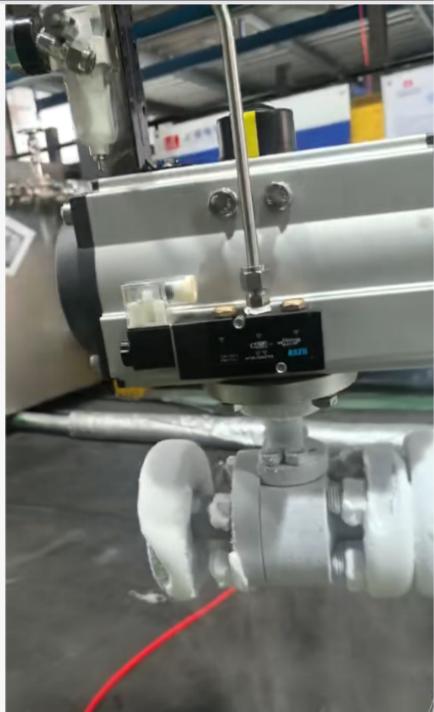
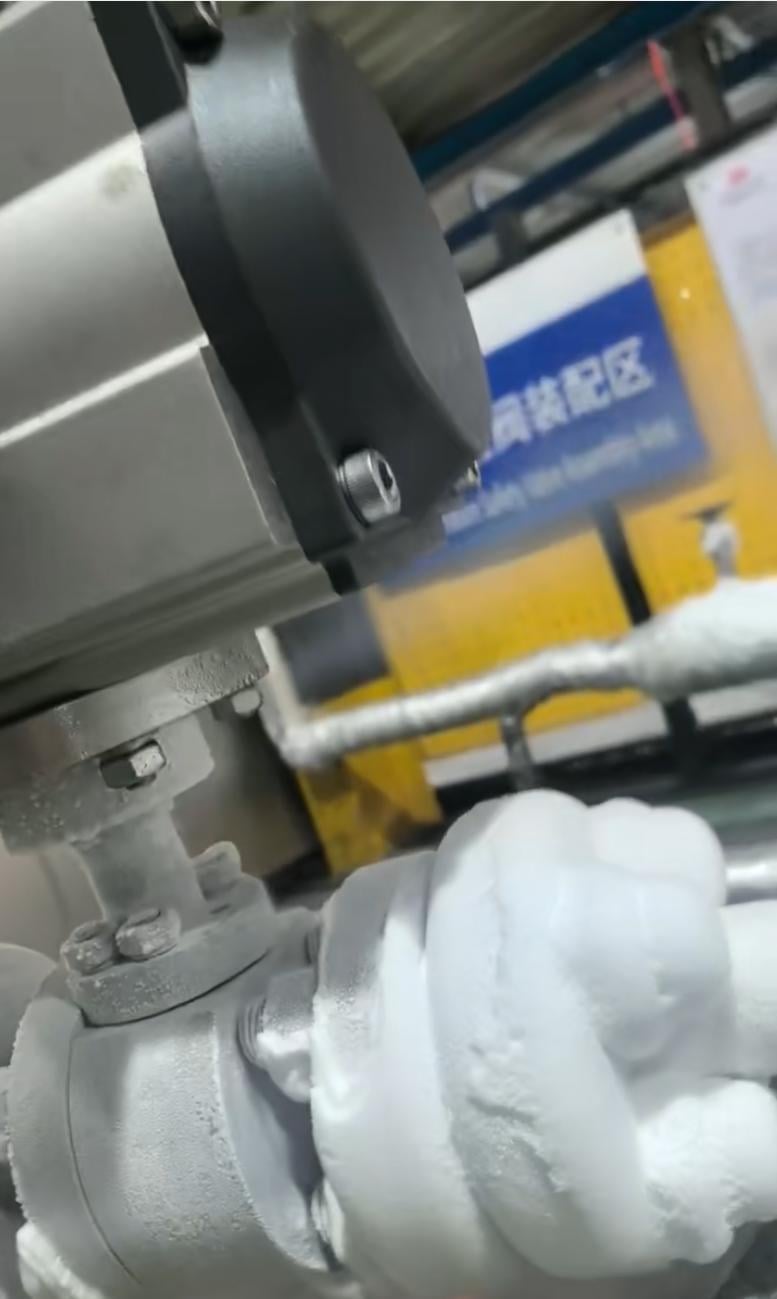
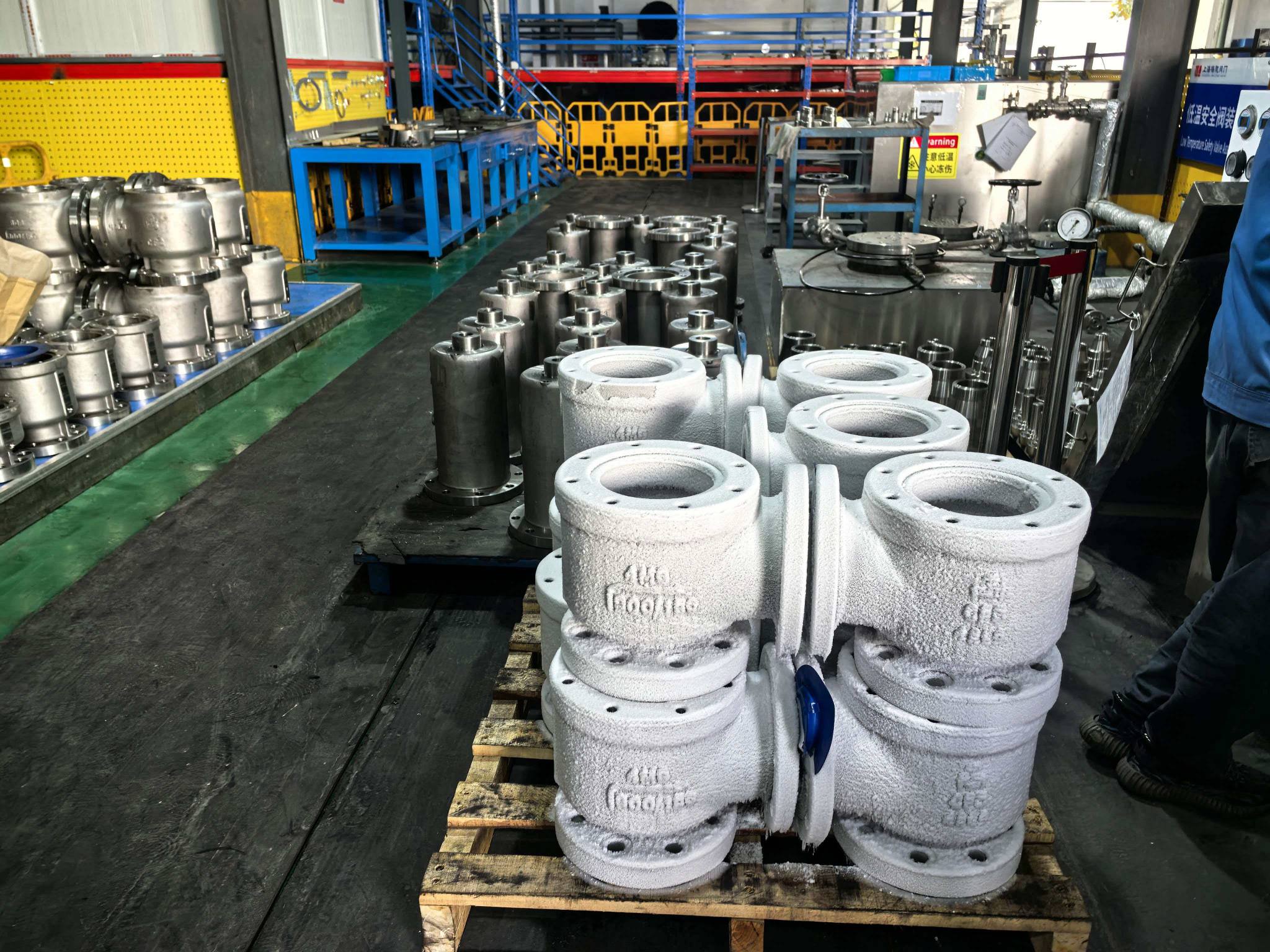
During the cryogenic test, the valve is often frozen and jammed, resulting in the inability to complete the opening and closing cycle test. This problem accounts for 35% of all test failures. The main reasons are: insufficient degreasing and drying of the valve, resulting in ice formation in the valve internal channel; the packing is not resistant to low temperature, and freezes and hardens under ultra-low temperature conditions, causing the stem to be stuck; the temperature of the valve is not uniform, resulting in local ice formation.
Solution: Before the test, the valve should be fully degreased and dried, using professional degreasing agents and high-temperature drying ovens to remove all grease and moisture, ensuring the moisture content is ≤0.05%; select low-temperature resistant packing (such as PCTFE, flexible graphite) to ensure that it remains elastic under ultra-low temperature conditions; use a high-precision temperature control system to ensure uniform cooling of the valve, avoiding local overcooling, and the temperature uniformity error is ≤±2°C.
2. Common Problem 2: Excessive Leakage Rate of the Valve
In the cryogenic sealing performance test, the leakage rate of the valve often exceeds the standard, which is one of the most common problems, accounting for 30% of test failures. The main reasons are: the valve seat and valve disc are not tightly fitted, resulting in gaps of more than 0.005mm; the seal is damaged during assembly; the test medium is not compatible with the seal material, causing the seal to shrink and deform by more than 5%.
Solution: Before the test, check the fit of the valve seat and valve disc, and reprocess or replace them if there are gaps; pay attention to the assembly process to avoid damaging the seal; select the test medium according to the seal material to ensure compatibility between the medium and the seal, avoiding seal deformation caused by chemical reaction or cold shrinkage. After improvement, the qualified rate of sealing performance test can reach 99%.
3. Common Problem 3: Inaccurate Test Temperature Control
The accuracy of test temperature control directly affects the test results. In the actual test, the phenomenon of inaccurate temperature control often occurs, accounting for 15% of test failures, such as the test temperature does not reach the set value, or the temperature fluctuation is too large (exceeding ±1°C). The main reasons are: the temperature sensor is not calibrated, resulting in inaccurate temperature measurement; the cooling system of the test chamber fails, resulting in slow cooling or inability to maintain the set temperature; the test chamber is not sealed tightly, resulting in external temperature interference.
Solution: Calibrate the temperature sensor before the test to ensure the accuracy of temperature measurement, and the calibration cycle shall not exceed 6 months; check the cooling system of the test chamber regularly, and maintain and repair it in time if there is a failure; ensure that the test chamber is sealed tightly, and install thermal insulation layers around the test chamber to avoid external temperature interference. After improvement, the temperature control accuracy can reach ±0.5°C.
4. Common Problem 4: Inaccurate Pressure Test Results
In the cryogenic pressure test, the pressure test results are often inaccurate, accounting for 12% of test failures, such as the measured opening pressure of the valve deviates from the set value by more than ±3%. The main reasons are: the pressure test bench is not calibrated, resulting in inaccurate pressure measurement; the valve is not installed tightly, resulting in pressure leakage of more than 0.1MPa/min; the test medium is vaporized, resulting in unstable pressure.
Solution: Calibrate the pressure test bench before the test to ensure the accuracy of pressure measurement, and the calibration cycle shall not exceed 6 months; install the valve tightly, and check the connection part for leakage before the test; select the test medium with good low-temperature stability (such as helium, liquid nitrogen), and take insulation measures for the pipeline to avoid medium vaporization and unstable pressure. After improvement, the pressure measurement accuracy can reach ±0.05% FS.
5. Common Problem 5: Damage to Valve Components During the Test
During the cryogenic test, valve components (such as stem, spring) are often damaged, resulting in test failure, accounting for 8% of test failures. The main reasons are: the material of the components does not meet the low-temperature resistance requirements, resulting in brittle fracture; the test pressure exceeds the maximum allowable working pressure of the valve by more than 10%; the operation is improper, resulting in impact on the components.
Solution: Select components made of cryogenic-resistant materials (such as CF3/CF3M, LC3/LCB) to ensure that they have sufficient toughness under ultra-low temperature conditions, and the impact toughness value is ≥27 J/cm²; strictly control the test pressure to avoid exceeding the maximum allowable working pressure of the valve; operate in accordance with the test procedures, and avoid violent operation that causes impact on the components. After improvement, the component damage rate during the test can be reduced to ≤1%.
6. Conclusion
In the cryogenic medium testing of low-temperature valves, common problems such as valve freezing and jamming, excessive leakage rate, and inaccurate temperature control often occur. These problems are mainly caused by improper pre-test preparation, unqualified equipment, and irregular operation. By taking corresponding solutions, such as strengthening pre-test treatment, calibrating equipment regularly, and standardizing operation procedures, we can effectively avoid these problems, improve test efficiency and quality, and ensure the reliability of low-temperature valves. The test efficiency can be improved by 40% and the test cost can be reduced by 30% after solving these common problems.
 Hot News
2026-09-08
2026-07-01
2026-06-22
2026-06-08
2026-05-26
2026-05-14

Shanghai Xiazhao Valve Co., LTD. provides high-performance ball and safety valves for petrochemical, natural gas, and industrial automation. Our API 6D, ANSI 600LB, and fire-safe designs ensure reliability. 95% on-time delivery. Request a quote.
Building 12, 6133 Huyi Road, Jiading District, Shanghai
Copyright © 2026 China Shanghai Xiazhao Valve Co., LTD. All rights reserved. Privacy Policy
 EN
EN