Get a Free Quote

Our representative will contact you soon.
Mobile
Email
Name
Company Name
Products
Message
0/1000
superheated steam pros cons  desuperheating solutions for industrial process optimization-0

News

Home >  News

Superheated Steam: Pros, Cons & Desuperheating Solutions for Industrial Process Optimization

May 07, 2026
Author: Shanghai Xiazhao Valve Engineering Team
Published: May 7, 2026
Category: Industrial Steam Systems, Valve Technology, Process Optimization

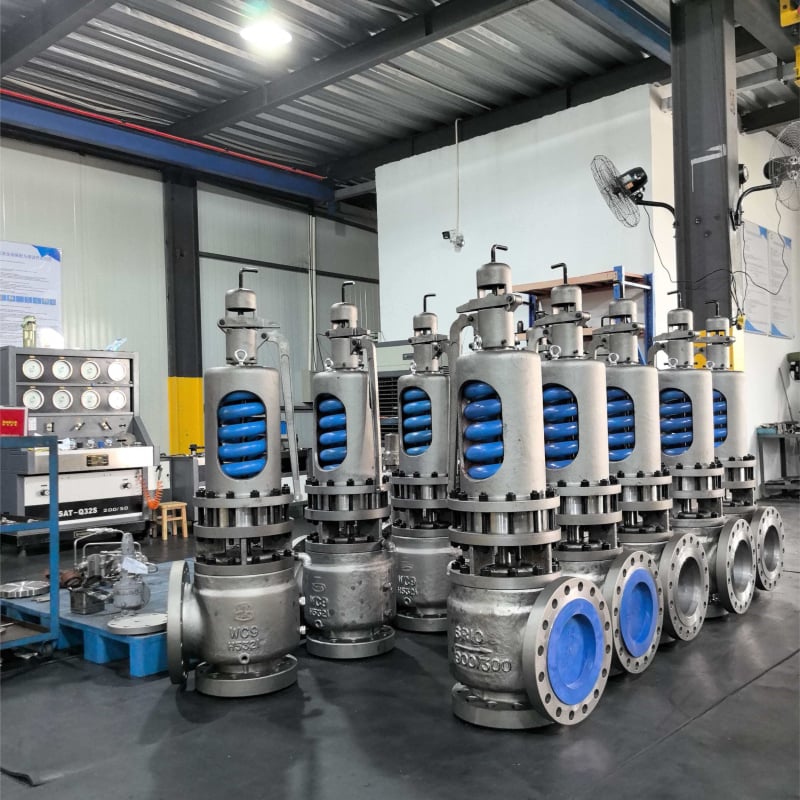
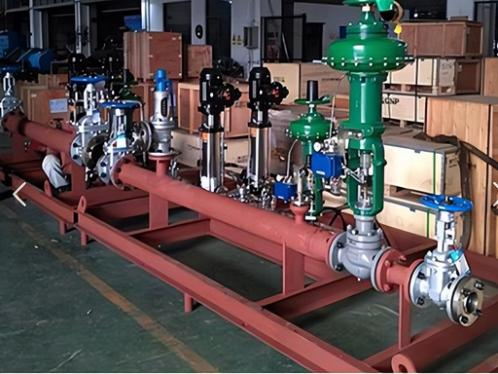
image.png image.png (3).jpg

Introduction
In modern industrial steam systems,superheated steam stands as a high-energy thermal medium widely deployed in power generation, petrochemical processing, and large-scale manufacturing. While it delivers exceptional performance in power conversion and long-distance transmission, its high-temperature, high-pressure nature creates critical challenges for downstream process equipment. This article examines the core advantages and limitations of superheated steam, explains the science behind desuperheating and pressure reduction (DS/PR) technology, and provides a complete engineering guide to system selection and calculation—critical knowledge for optimizing steam utilization, protecting equipment, and maximizing energy efficiency.

What is Superheated Steam?
Superheated steam is saturated steam further heated above its saturation temperature at a given pressure, resulting in a completely dry, moisture-free thermal medium. Unlike saturated steam (which exists at boiling point and releases latent heat during condensation), superheated steam’s energy resides primarily in sensible heat, giving it unique thermodynamic properties for specialized industrial use.

Advantages of Superheated Steam
1.Superior Heat Transfer Efficiency & Stability
• 100% dryness (no liquid water) ensures consistent heat transfer coefficients, eliminating fouling and corrosion on heat exchanger surfaces.
• Maintains stable thermal performance even across long pipelines, unlike saturated steam which condenses and loses efficiency.
• Ideal for high-temperature processes requiring precise, uniform heating without moisture contamination.

2.Minimal Transmission Losses
• Low viscosity and excellent flow properties reduce friction losses in pipelines.
• Supports extremely high flow velocities (up to 100 m/s) (vs. 20–40 m/s for saturated steam), enabling smaller pipe diameters and lower infrastructure costs.
• Significantly reduced heat loss during transport, making it ideal for long-distance distribution across large industrial complexes.

3.Greater Power Generation Capacity
• Higher enthalpy (total energy content) converts more efficiently to mechanical work in turbines, steam pumps, and other power machinery.
• Critical for power plants: superheating boosts Rankine cycle efficiency, increasing electricity output while reducing fuel consumption.
• Delivers stronger performance in high-load drive systems, enhancing overall plant productivity.

4.Eliminates Water Hammer Risk
• Zero liquid water content prevents damaging water hammer (hydraulic shock) in pipes, valves, and equipment.
• Protects system integrity, reduces maintenance, and extends service life of pipeline components.
• Ensures stable, safe operation—especially vital in high-pressure industrial networks.

Disadvantages of Superheated Steam
1.Mismatched Parameters for Most Process Equipment
• Most downstream heat exchangers, reactors, and unit heaters are rated for low-to-medium parameters (e.g., 0.8 MPa, 170°C).
• Direct use causes overpressure/overtemperature, risking equipment failure or safety incidents.

2.Accelerated Equipment Degradation
• High temperature/pressure creates severe erosion, corrosion, and thermal stress on pipes, valves, and components.
• Requires expensive alloy materials (e.g., 12Cr1MoV) instead of standard carbon steel.
• Shortens service life, increases maintenance frequency, and raises operational costs.

3.Significant Energy Waste
• Direct injection into low-parameter equipment wastes excess superheat as unused heat (via radiation or exhaust).
• Reduces overall thermal efficiency and increases fuel/energy costs.
• Thermodynamically inefficient: high-grade energy misapplied to low-grade tasks.

4.Complex Control & Stability Challenges
• Strong pressure-temperature interdependency makes regulation difficult.
• Boiler load fluctuations directly disrupt steam quality, causing unstable process temperatures and inconsistent product quality.
• Requires sophisticated control systems to maintain stable downstream conditions.

Core Solution: Desuperheating & Pressure Reduction (DS/PR) Technology
To resolve superheated steam’s limitations while preserving its benefits, industrial systems rely on desuperheating and pressure reduction stations (DS/PR)—the critical interface between high-energy boiler output and process-ready steam.

Working Principle
The system performstwo synchronized functions:
1. Pressure Reduction: Throttling high-pressure steam to target working pressure.
2. Desuperheating: Spraying atomized demineralized water to absorb excess heat, lowering temperature to saturation-plus levels.

1.Pressure Reduction Process
• Uses control valves (single or multi-stage) to throttle steam, converting pressure energy to velocity (and controlled heat loss).
• Single-stage: For pressure drops ≤ 2.0 MPa.
• Multi-stage (2–3 stages): For ΔP 2.0 MPa, limiting each stage to 1.0–1.5 MPa to avoid excessive velocity, erosion, and noise.
• Maintains stable outlet pressure within ±5% of setpoint.

2.Desuperheating Process (Water Injection)
• Industry standard:atomized water injection (most efficient and economical).
• High-pressure demineralized water/condensate is sprayed as fine droplets (<50 μm) into the steam stream.
• Droplets instantly vaporize, absorbing massive heat and lowering steam temperature.
• Critical: final temperature must stay 10–20°C above saturation to ensuredryness ≥98% and prevent water carryover.

image.png

Engineering Selection & Calculation Guide
Proper DS/PR system design requires precise thermochemical calculation. Below is the complete methodology used by Xiazhao Valve for industrial projects.

Pre-Selection Parameters (Must Confirm)
• Inlet (superheated): P₁ (MPa abs), T₁ (°C), Flow Q (t/h)
• Outlet (process): P₂ (MPa abs), T₂ (°C)
• Cooling water: Temperature t (typically 20–30°C)
• Design margins: 10–15% flow; 5–10% P/T regulation

Step 1:Pressure Reduction Sizing
A. Pressure Drop & Stage Selection
• ΔP = P₁ − P₂
• ΔP ≤ 2.0 MPa: single-stage valve
• ΔP 2.0 MPa: multi-stage (2–3 stages)


B. Velocity Check
• Before reduction: 20–40 m/s
• After reduction: 15–30 m/s
• Formula: •v=Q×1000/3600×ρ×A=Q/3.6×ρ×π(d/2)²
Where:
•Q = t/h, d = pipe diameter (m), ρ = steam density (kg/m³), v = velocity (m/s)

C.Valve Specification
•Select DN matching pipeline
•PN ≥ P₁
•Ensure Cv/Kv capacity meets maximum flow + margin

Step 2:Desuperheating Water Calculation
Based on enthalpy balance:
Q×h1+G×hw=(Q+G)×h2
Rearranged:
G=Q×(h1−h2/h2−hw)
Where:
•Q = inlet steam flow (kg/h)
•h₁ = inlet enthalpy (kJ/kg, from steam tables)
•h₂ = outlet enthalpy (kJ/kg, from steam tables)
•G = water injection rate (kg/h)
•h_w = water enthalpy ≈ 4.2 × t (kJ/kg)

Practical Example
Given:
•P₁ = 4.0 MPa, T₁ = 400°C, Q = 20 t/h
•P₂ = 0.8 MPa, T₂ = 170°C
•t = 25°C → h_w ≈ 105 kJ/kg
•From tables: h₁ = 3214.5 kJ/kg; h₂ = 2792.2 kJ/kg
G=20,000×3214.5−2792.2/2792.2−105≈3,280kg/hWith 10% margin: 3.6 t/h injection rate

Step 3:Nozzle Selection
•Atomization: droplet size ≤50 μm
•Material: 304/316SS for corrosion resistance
•Turndown ratio: ≥ 4:1 for load variation
•Quantity/size matched to G + margin

Critical Selection & Operation Guidelines
1.Pressure Safety: Set P₂ 0.05–0.1 MPa higher than equipment rating to ensure delivery.
2.Avoid Wet Steam: Maintain T₂ 10–20°C above saturation at P₂; dryness ≥98%.
3.Load Flexibility: Design for ±10% flow variation.
4.Water Quality: Use demineralized/condensate; install filtration to prevent nozzle clogging.
5.Material Compatibility: For T 350°C, use 12Cr1MoV; valves: high-temperature alloys.

Why Partner with Shanghai Xiazhao Valve?
We specialize in custom-engineered desuperheating and pressure reduction solutions for global industrial clients:
•Application-specific design for power, petrochemical, refining, and manufacturing
•High-performance control valves & multi-stage trim for extreme superheated conditions
•Precision atomization systems ensuring stable, dry steam at outlet
•Full thermodynamic calculation & sizing per IAPWS-IF97 standards
•Global material compliance: ASME, API, ANSI, GOST
•Lifecycle support: engineering, commissioning, maintenance

Conclusion
Superheated steam is a high-value energy source—powerful but demanding. Its unmatched advantages in transmission and power generation come with steep costs in equipment compatibility, efficiency, and maintenance. The key to safe, economical operation is proper desuperheating and pressure reduction: converting high-energy superheated steam into stable, process-ready thermal fluid.
By understanding these principles and applying rigorous engineering selection, industrial plants can maximize energy efficiency, extend equipment life, reduce operational risk, and lower total costs.

Need a custom DS/PR solution?
Contact Shanghai Xiazhao Valve’s engineering team for a free system assessment and sizing calculation tailored to your steam parameters. Stay tuned for our next article: Advanced Control Strategies for Superheated Steam Systems & Case Studies in Energy Savings.

SEO Keywords (for Google Indexing)
superheated steam advantages disadvantages, desuperheating and pressure reduction, steam desuperheating calculation, pressure reducing valve for superheated steam, industrial steam system optimization, steam conditioning valve, water spray desuperheater, steam energy efficiency, industrial boiler steam solutions, Xiazhao Valve desuperheating station

3 Groups of Common Working Condition Selection Calculation Tables
The following tables cover three common industrial superheated steam desuperheating and pressure reduction working conditions, including inlet/outlet parameters, calculation results, and recommended equipment specifications, which can be directly referenced for engineering design.

Table 1: Working Condition 1 (Medium-Pressure, Medium-Flow)

Parameter Type

Specific Parameters

Calculation Results

Recommended Specifications

Inlet Superheated Steam

P₁=3.0MPa (abs), T₁=350℃, Q=15t/h

-

-

Outlet Target Steam

P₂=0.6MPa (abs), T₂=160℃

-

-

Cooling Water

t=25℃, h_w≈105kJ/kg

-

-

Pressure Drop (ΔP)

2.4MPa

ΔP2.0MPa, multi-stage (2-stage) pressure reduction

2-stage pressure reducing valve

Enthalpy Value (from steam table)

h₁=3115.7kJ/kg, h₂=2756.8kJ/kg

-

-

Water Injection Rate (G)

-

Calculated G≈2180kg/h; with 10% margin, G=2.4t/h

Nozzle: 304SS, droplet size≤50μm

Valve Specification

-

PN≥3.0MPa, DN matching pipeline

PN4.0MPa, DN80 (adjustable according to actual pipeline)


Table 2: Working Condition 2 (High-Pressure, High-Flow)

Parameter Type

Specific Parameters

Calculation Results

Recommended Specifications

Inlet Superheated Steam

P₁=5.0MPa (abs), T₁=420℃, Q=30t/h

-

-

Outlet Target Steam

P₂=1.0MPa (abs), T₂=180℃

-

-

Cooling Water

t=28℃, h_w≈117.6kJ/kg

-

-

Pressure Drop (ΔP)

4.0MPa

ΔP2.0MPa, multi-stage (3-stage) pressure reduction

3-stage pressure reducing valve

Enthalpy Value (from steam table)

h₁=3271.9kJ/kg, h₂=2834.8kJ/kg

-

-

Water Injection Rate (G)

-

Calculated G≈5230kg/h; with 10% margin, G=5.75t/h

Nozzle: 316SS, droplet size≤50μm, 2 nozzles

Valve Specification

-

PN≥5.0MPa, DN matching pipeline

PN6.3MPa, DN100 (adjustable according to actual pipeline)


Table 3: Working Condition 3 (Low-Pressure, Small-Flow)

Parameter Type

Specific Parameters

Calculation Results

Recommended Specifications

Inlet Superheated Steam

P₁=1.6MPa (abs), T₁=280℃, Q=5t/h

-

-

Outlet Target Steam

P₂=0.4MPa (abs), T₂=150℃

-

-

Cooling Water

t=22℃, h_w≈92.4kJ/kg

-

-

Pressure Drop (ΔP)

1.2MPa

ΔP≤2.0MPa, single-stage pressure reduction

Single-stage pressure reducing valve

Enthalpy Value (from steam table)

h₁=3034.4kJ/kg, h₂=2748.7kJ/kg

-

-

Water Injection Rate (G)

-

Calculated G≈480kg/h; with 10% margin, G=0.53t/h

Nozzle: 304SS, droplet size≤50μm

Valve Specification

-

PN≥1.6MPa, DN matching pipeline

PN2.5MPa, DN50 (adjustable according to actual pipeline)


Note: All calculation results are based on the enthalpy balance formula and steam thermophysical properties table, and the design margin is 10%. The recommended specifications can be adjusted according to the actual on-site pipeline size and equipment requirements. For customized calculation, please contact Shanghai Xiazhao Valve engineering team.

superheated steam pros cons  desuperheating solutions for industrial process optimization-1

Get a Free Quote

Our representative will contact you soon.
Mobile
Email
Name
Company Name
Products
Message
0/1000