EN
EN

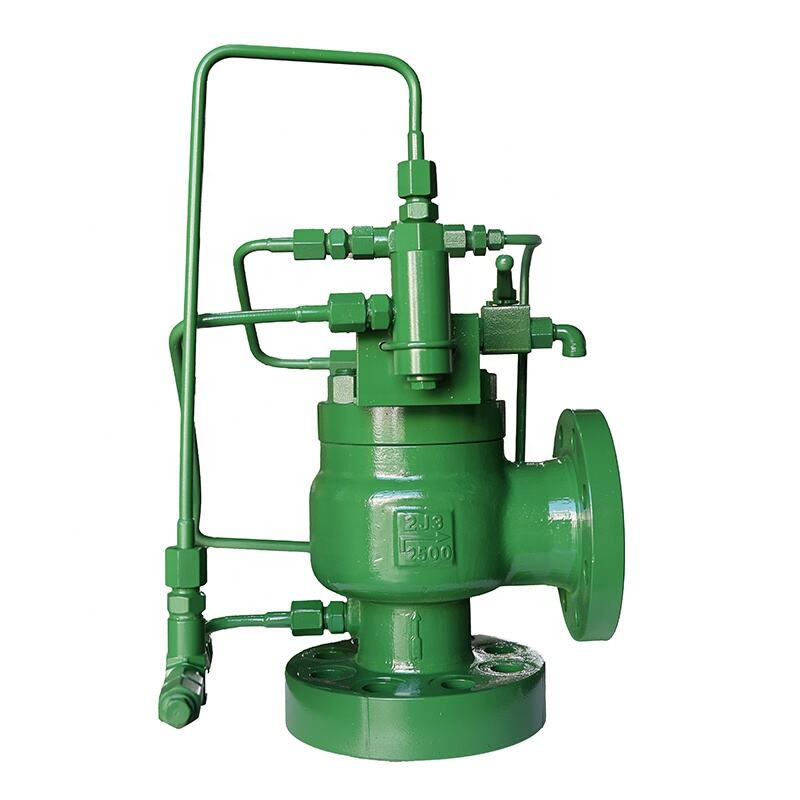
Understanding how a pilot operated valve works is essential for engineers, procurement specialists, and plant operators who depend on reliable pressure management in critical industrial systems. Unlike direct-acting safety valves that rely solely on spring force to hold the disc closed, a pilot operated valve uses system pressure itself as the primary sealing force, enabling more precise, stable, and efficient operation across a wide range of industrial applications. This fundamental difference in working principle gives the pilot operated valve a significant advantage in high-pressure, large-flow, and demanding process environments.
The working mechanism of a pilot operated valve is elegant in its logic: the main valve remains tightly sealed by process pressure acting on a larger area, while a small pilot valve continuously monitors line pressure and triggers the main valve to open only when a precise set point is reached. This article provides a thorough explanation of that working principle, breaking down each component, stage, and operational phase so that anyone involved in specifying or operating a pilot operated valve can make confident, well-informed decisions.
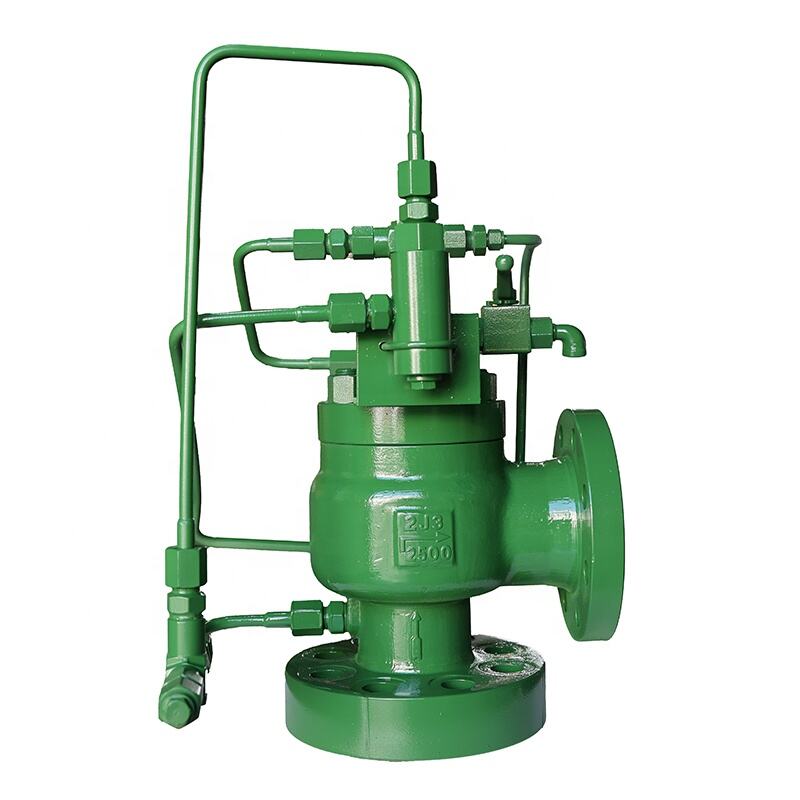
The Core Working Principle of a Pilot Operated Valve
How System Pressure Creates the Sealing Force
In a conventional spring-loaded safety valve, the spring exerts a downward force on the disc to keep it closed against inlet pressure. A pilot operated valve takes a fundamentally different approach. The inlet pressure is directed through a small sensing line to the top of the main valve disc or piston, creating a net downward force that keeps the valve tightly shut. Because the area on top of the piston is larger than the area exposed to inlet pressure from below, even a modest pressure differential translates into a powerful sealing load.
This pressure-assisted sealing mechanism means that as system pressure increases, the sealing force of the pilot operated valve increases proportionally. The valve essentially becomes harder to open unintentionally as pressure builds, which dramatically reduces the risk of simmering, chattering, or premature opening — problems commonly associated with direct-acting safety valves operating near their set pressure.
The practical consequence is a much tighter operational band. A well-engineered pilot operated valve can operate continuously at pressures very close to its set point — often up to 98% of set pressure — without any leakage or instability. This is a critical advantage in processes where operating pressure must remain as high as possible for efficiency while still providing reliable overpressure protection.
The Role of the Pilot Valve in Triggering Response
The pilot valve is the sensing and decision-making component of the overall assembly. It is a small, spring-loaded valve that continuously monitors the pressure at the inlet of the main valve. Under normal operating conditions, the pilot valve remains closed, allowing pressurized fluid to be routed to the dome or top chamber of the main valve piston, maintaining the sealing force described above.
When the inlet pressure rises to reach the set point of the pilot operated valve, the pilot valve opens. This action vents the pressurized fluid from the top chamber of the main valve to a discharge or exhaust path. With the holding pressure removed from above the piston, the higher inlet pressure from below immediately lifts the main disc or piston, opening the main valve to its full capacity and relieving the excess pressure.
The pilot valve's small size and precise spring calibration allow for extremely accurate set-point control. Because the pilot is responding to real-time system pressure through a direct sensing connection, the response is fast, repeatable, and not subject to the mechanical friction and wear variations that can affect larger direct-acting valves over time. This is one reason the pilot operated valve is preferred in custody transfer, high-purity, and safety-critical applications.
Key Components and Their Functions
Main Valve Body and Piston Assembly
The main valve body of a pilot operated valve houses the primary pressure-containing components, including the inlet nozzle, the disc or piston, and the outlet chamber. The piston is the central moving element. It is designed with a larger effective seating area on its upper face compared to the nozzle seat area on its lower face, which is what enables the pressure-differential sealing mechanism to function correctly.
The seating surfaces of the main valve are critical to leak-tight performance. Because the pilot operated valve is sealed partly by hydraulic pressure rather than relying entirely on mechanical spring force, the seat-to-disc contact can be maintained with a lower contact stress, which actually improves seat longevity and reduces the risk of damage during opening and closing cycles.
Materials for the main valve body are selected based on the process fluid, temperature, and pressure class. Carbon steel, stainless steel, and various alloy grades are common depending on the application environment. Proper material selection ensures that the pilot operated valve delivers consistent performance over its service life without corrosion or erosion compromising the precision sealing geometry.
Sensing Line and Dome Chamber
The sensing line is a small-bore tubing connection that routes a sample of inlet pressure from the main valve inlet to both the pilot valve and the dome chamber above the main piston. This line is the communication pathway that makes the entire working principle of the pilot operated valve possible. Its integrity is paramount — any blockage, leakage, or contamination in the sensing line can directly impair valve function.
The dome chamber is the pressure-filled cavity above the main piston. When the pilot valve is closed, this chamber is pressurized and holds the main piston firmly on its seat. When the pilot valve opens, the dome is vented, releasing the holding force. The speed at which dome pressure drops determines the opening speed of the main valve, which can be engineered for pop-action or modulating behavior depending on the application requirements.
In some configurations, the sensing line includes a filter or strainer to prevent particulate contamination from reaching the pilot valve. Because the pilot valve has very small internal passages, even minor contamination can cause erratic operation. Maintenance of the sensing line and filter is therefore an important aspect of the long-term reliability of any pilot operated valve installation.
Operational Phases: From Closed to Full Open and Back
Normal Operating Phase and Pressure Buildup
During the normal operating phase, the pilot operated valve remains fully closed and leak-tight. The dome chamber is pressurized at inlet pressure, and the net downward force on the main piston keeps the seat firmly sealed. The pilot valve spring holds the pilot disc closed, preventing any venting of dome pressure. The valve is essentially in a locked state, sustained entirely by the balance of pressures acting on the piston geometry.
As operating pressure rises toward the set point — which can happen during process upsets, flow changes, or thermal expansion events — the pilot valve spring is gradually overcome. The sensing line continuously transmits real-time pressure to the pilot valve inlet, so the pilot responds dynamically and precisely as pressure climbs. This continuous monitoring capability is one of the defining advantages of the pilot operated valve architecture over less sophisticated protection devices.
Throughout this phase, there is no leakage or seat erosion because the sealing force actually increases with pressure. This is in direct contrast to a spring-loaded valve, where the sealing force is fixed by the spring setting and leakage becomes increasingly likely as operating pressure approaches set pressure. The pilot operated valve eliminates this limitation by harnessing system energy as the sealing mechanism.
Opening, Full Flow, and Reclosing Sequence
When set pressure is reached, the pilot valve opens with a snap-action or gradual response, depending on its design type. For pop-action pilots, the dome is vented rapidly, and the main piston lifts quickly to full open position, providing maximum flow capacity almost instantaneously. For modulating pilots, the dome is vented proportionally, and the main valve opens only as much as is necessary to maintain system pressure at or near the set point, which minimizes media loss and process disruption.
At full open, the pilot operated valve can pass its rated relieving capacity, which is determined by the main valve nozzle diameter and the pressure differential. Because the main valve opens fully with very little backpressure effect from the dome — since it has been vented — the flow coefficient (Cd) of a pilot operated valve is typically higher than that of an equivalent direct-acting safety valve, meaning more flow capacity per unit of valve size.
Once the overpressure event is resolved and inlet pressure drops below the set point minus the blowdown differential, the pilot valve closes. This redirects inlet pressure back into the dome chamber, rebuilding the holding force on the main piston and causing the main valve to close cleanly and tightly. The reclosing pressure — known as the reseat pressure — is controlled precisely by the pilot valve design, giving the pilot operated valve a much narrower blowdown band than most direct-acting alternatives.
Applications and Suitability of Pilot Operated Valves
High-Pressure and High-Capacity Industrial Systems
The pilot operated valve is the preferred choice in applications where the operating pressure is close to the set pressure and where tight shutoff is mandatory between relief events. Refineries, petrochemical plants, gas processing facilities, and power generation systems all commonly specify pilot operated valves for their primary overpressure protection duty. In these environments, the ability to operate at up to 98% of set pressure without leakage translates directly into improved process efficiency and reduced emissions.
High-capacity applications also benefit from the pilot operated valve design because the main valve piston can be sized independently of the pilot. A very large main valve can be controlled by a compact, precise pilot, resulting in a valve assembly that combines high flow capacity with fine pressure control. This scalability is not easily achievable with direct-acting safety valves, which must balance spring force, disc area, and flow capacity within a single mechanical system.
Cryogenic and high-temperature applications also use specialized variants of the pilot operated valve, where the pilot sensing line may be thermally isolated or the pilot itself may be remotely mounted to protect it from extreme temperatures. This design flexibility makes the pilot operated valve suitable across a broader range of process conditions than many alternative valve types.
API and International Standards Compliance
In many industries, pressure relief devices must comply with recognized international standards such as API 526, API 520, or ASME Section VIII. The pilot operated valve is explicitly recognized and specified under these frameworks, confirming its legitimacy and suitability as a code-compliant overpressure protection device. Engineers specifying a pilot operated valve for a new installation or replacement must verify that the selected valve meets the applicable standard for the pressure class, fluid type, and relieving capacity required.
The modulating variant of the pilot operated valve is particularly valued in applications governed by API standards because it minimizes the quantity of fluid released during a relief event. In both environmental compliance and process cost terms, a modulating pilot operated valve that releases only the minimum necessary fluid to control pressure is far superior to a pop-action device that fully opens and vents large quantities of process media before reclosing.
Maintenance and testing requirements for pilot operated valves are also addressed in standards and manufacturer documentation. Regular testing of the pilot valve set pressure, verification of the sensing line integrity, and inspection of the main valve seat condition are all part of a sound maintenance program that ensures the pilot operated valve performs reliably when it matters most.
FAQ
What is the main difference between a pilot operated valve and a conventional safety valve?
The primary difference is in the sealing and actuation mechanism. A conventional safety valve uses a compressed spring to hold the disc closed against inlet pressure, while a pilot operated valve uses the inlet pressure itself — directed to the top of the main piston — as the sealing force. This allows the pilot operated valve to operate much closer to its set pressure without leakage and to open with greater precision and repeatability than a direct-acting spring-loaded valve.
Can a pilot operated valve be used with gases, liquids, and steam?
Yes. The pilot operated valve is designed to handle gases, vapors, liquids, and steam depending on the specific configuration and materials selected. The pilot valve design — whether pop-action or modulating — may be chosen based on the compressibility and phase of the process fluid. It is important to specify the correct pilot operated valve variant for the intended service to ensure safe and efficient operation under all anticipated conditions.
What causes a pilot operated valve to fail to open at set pressure?
The most common causes of a pilot operated valve failing to open at set pressure include blockage or restriction in the sensing line, contamination of the pilot valve internals preventing it from responding to pressure, or corrosion and build-up on the pilot disc or seat. Regular inspection and maintenance of the sensing line, pilot valve filter, and pilot internals are essential to prevent these failure modes and ensure the pilot operated valve activates reliably during an overpressure event.
How is the set pressure of a pilot operated valve adjusted?
The set pressure of a pilot operated valve is adjusted by changing the spring compression on the pilot valve, typically by turning an adjustment screw or replacing the pilot spring with one of a different rating. This adjustment is independent of the main valve, which is one of the significant maintenance advantages of the pilot operated valve design. Set pressure adjustments should always be performed by qualified personnel and verified against calibrated test equipment before the valve is returned to service.