EN
EN
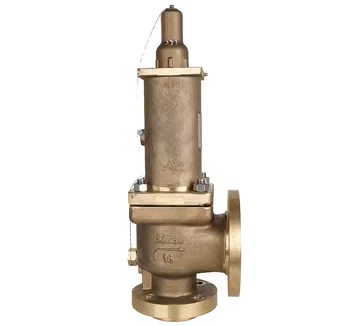
Choosing the right spring loaded relief valve maker is one of the most consequential decisions a procurement or engineering team can make. A spring loaded relief valve protects piping systems, vessels, and equipment from dangerous overpressure events, and the quality of that valve depends entirely on the manufacturer behind it. Whether you are sourcing for oil and gas, petrochemical, or general process industries, understanding what separates a reliable spring loaded relief valve maker from an unreliable one will save time, reduce risk, and protect your assets.
A spring loaded relief valve operates on a deceptively simple principle: when system pressure exceeds the set point, the valve opens to release excess pressure and then reseats once pressure returns to a safe level. However, the engineering precision required to make a spring loaded relief valve perform consistently over thousands of cycles is significant. This article walks you through the exact criteria you should evaluate before committing to any spring loaded relief valve maker, so that your selection process is structured, defensible, and outcome-focused.
Compliance Standards and Design Certification
Why Certification Defines Maker Credibility
The first filter when selecting a spring loaded relief valve maker is verifying that the manufacturer designs and produces valves in accordance with recognized international standards. API 526 is one of the most widely referenced standards governing flanged steel spring loaded relief valve design for refinery service. A maker that manufactures to API 526 demonstrates that their spring loaded relief valve geometry, inlet and outlet flange ratings, orifice designations, and material selections have been validated against industry consensus requirements.
Beyond API 526, look for compliance with ASME Section VIII for pressure vessel applications and PED certification for European markets. A credible spring loaded relief valve maker will have documented design calculations, certified test records, and third-party inspection capability. These certifications are not just formalities; they are evidence that the spring loaded relief valve will perform correctly at the rated set pressure under real operating conditions.
Material Traceability and Process Documentation
A qualified spring loaded relief valve maker must provide full material traceability for wetted components. This means every casting, forging, and trim part used in the spring loaded relief valve assembly should be backed by mill certificates and heat numbers. For aggressive services such as sour gas or high-temperature steam, the material selection directly affects whether the spring loaded relief valve will resist corrosion and maintain its mechanical properties over time. Ask the maker for their material control procedure and confirm it aligns with your project specifications.
Manufacturing Capability and Quality Assurance
In-House Testing Infrastructure
A serious spring loaded relief valve maker invests in dedicated in-house testing facilities. Every spring loaded relief valve should be set and tested on a calibrated test bench before shipment. Cold differential test pressure, seat tightness, and blowdown performance are the three core parameters verified during this process. When a maker performs this testing internally rather than outsourcing it, they maintain tighter control over the spring loaded relief valve's accuracy and consistency across production batches.
Ask prospective makers whether their test benches are regularly calibrated and whether third-party witness inspection is available. For critical applications in oil and gas pipelines or process piping, many engineering procurement and construction firms require witnessed testing of every spring loaded relief valve before it leaves the factory. A maker that accommodates this requirement demonstrates both confidence in their product and transparency in their process.
Production Capacity and Lead Time Reliability
Manufacturing capability also includes the ability to deliver a spring loaded relief valve on schedule. Projects in process industries often operate on tight timelines, and a spring loaded relief valve maker that consistently misses delivery windows creates downstream cost and schedule risk. Evaluate the maker's production lead times for standard and custom spring loaded relief valve configurations. Inquire about their supply chain for springs, body castings, and trim components, since these are common bottleneck points that affect how quickly a spring loaded relief valve can be assembled and shipped.
Application-Specific Expertise and Technical Support
Sizing and Selection Engineering
Not every spring loaded relief valve fits every application. A capable maker should offer technical guidance on spring loaded relief valve sizing based on your required relieving capacity, inlet conditions, back pressure type, and fluid phase. Incorrect sizing of a spring loaded relief valve can result in chatter, seat leakage, or failure to lift at the correct pressure. The best makers employ application engineers who understand API 520 sizing methods and can assist with datasheet development, ensuring the spring loaded relief valve specified is the right one for your system.
When evaluating a spring loaded relief valve maker for gas service or process piping applications, request reference documentation showing successful deployments in comparable services. A maker with proven experience in your industry will understand the nuances that affect spring loaded relief valve performance, such as superimposed back pressure in closed discharge systems or high inlet pressure drop that can cause instability during relief events.
After-Sales Support and Spare Parts Availability
The relationship with a spring loaded relief valve maker does not end at delivery. Over the operating life of a spring loaded relief valve, the spring may fatigue, the disc may wear, and the nozzle may require lapping. A maker that maintains a readily available spare parts inventory for their spring loaded relief valve product lines reduces your maintenance downtime significantly. Confirm that the maker offers repair kits, replacement springs in the correct range, and technical guidance for field maintenance of the spring loaded relief valve. Long-term support capability is a practical indicator of a maker's stability and commitment to their customers.
FAQ
What standards should a spring loaded relief valve maker comply with?
A reputable spring loaded relief valve maker should comply with API 526 for flanged steel designs used in refinery and process service, ASME Section VIII for pressure vessel applications, and PED where European market access is required. These standards ensure that every spring loaded relief valve produced meets defined requirements for design, materials, and testing. Always request certification documentation before approving a spring loaded relief valve maker for your approved vendor list.
How do I verify the quality of a spring loaded relief valve maker's products?
Verifying quality starts with reviewing the maker's quality management system, ideally ISO 9001 certified. Request sample test reports for a spring loaded relief valve similar to your specification. Confirm that the maker performs hydrostatic body tests, seat tightness tests, and set pressure verification on every spring loaded relief valve before shipment. Third-party inspection and witnessed factory acceptance testing provide an additional quality layer for critical spring loaded relief valve applications.
Can a spring loaded relief valve maker support custom configurations?
Yes, many established spring loaded relief valve makers can accommodate custom configurations including special trim materials, non-standard orifice sizes, jacketed bodies for viscous or solidifying fluids, and special end connections. When requesting a custom spring loaded relief valve, provide the maker with a detailed datasheet covering design pressure, temperature, fluid composition, required capacity, and any special environmental or regulatory requirements. A technically strong spring loaded relief valve maker will use this information to engineer a solution that meets your exact operational needs.