EN
EN

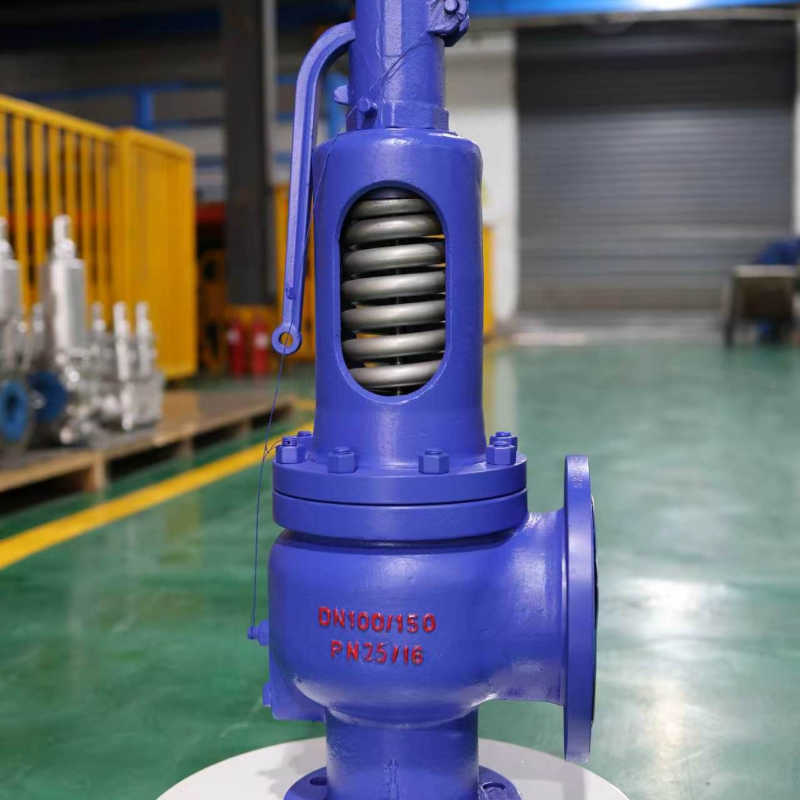
Your boiler checks out. Pressure gauge: normal. Temperature gauge: normal. Flow meter: normal. Three instruments, zero faults.
But the steam coming out of your boiler may never have been fully dry to begin with.
At typical operating conditions, steam dryness fraction ranges from 0.95 to 0.98 — meaning every metric ton of steam carries 20 to 50 kg of entrained water. Neither the pressure gauge nor the temperature gauge can detect it. But when that water reaches your safety valve, the consequences extend well beyond reduced heat exchanger output.
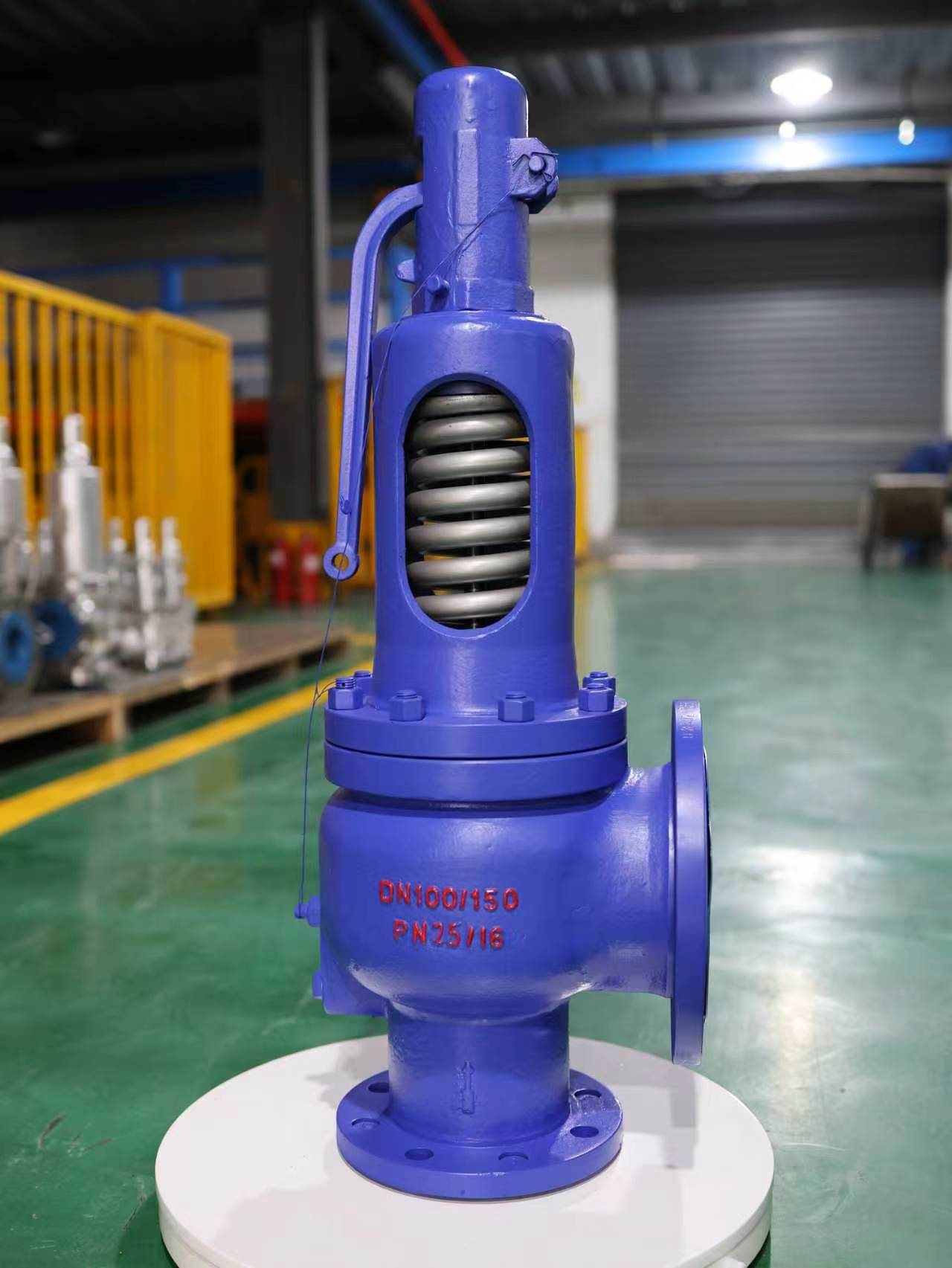
A spring-loaded safety valve (DN100/150, PN25/16) in a manufacturing facility. The spring controls the reseating force and is directly affected by wet-steam service.
This article examines what entrained moisture does to pressure relief valves, based on published standards, regulatory findings, and experimental data.
1. Safety Valves Are Rated for Dry Steam — But Boiler Steam Is Usually Not Fully Dry
Safety valve capacity certification is based on dry saturated steam. Per ASME and National Board requirements, the certified capacity stamped on a valve is expressed in pounds (or kilograms) of saturated steam per hour. The coefficient of discharge method uses theoretical flow formulas developed for dry steam conditions.
In practice, however, at rated operating conditions boiler steam typically has a dryness fraction of only 0.96 to 0.97. Chinese boiler standards, for example, limit saturated steam moisture to 3% for water-tube boilers and 4% for shell boilers — corresponding to dryness fractions of 0.97 and 0.96 respectively.
There is therefore a gap between the certified condition and the field condition: the valve is rated for a medium that rarely exists exactly as specified.
When dryness drops to 0.95, every metric ton of steam carries 50 kg of water. That water arrives at the safety valve inlet and changes how the valve performs.
2. Two-Phase Flow: A Recognized Uncertainty
When a safety valve opens and discharges a steam-water mixture, the flow regime is two-phase. This is not an edge case — it is a recognized engineering challenge for which no fully validated sizing method exists.
API RP 520 Appendix D addresses two-phase relief sizing but notes that the subject remains controversial: no sizing method has been validated by tests, nor is there a recognized procedure for certifying two-phase relief capacity.
Current methods — the Homogeneous Equilibrium Model (HEM) and the Homogeneous Non-Equilibrium Model (HNE) — rely on simplifying assumptions. Experimental data shows that HEM can under-predict mass flow under real conditions. Researchers have had to introduce empirical correction factors substantially higher than the gas discharge coefficient in order to match test data.
In practical terms: if steam dryness drops below 0.95, the valve's actual capacity is uncertain. It may exceed nameplate, or it may fall short. Either deviation is a safety concern.
3. Droplet Erosion: A Chronic Damage Mechanism
Water droplets are several hundred times denser than steam. When a steam-water mixture accelerates through the valve seat and disc clearances, those droplets act as abrasive particles.
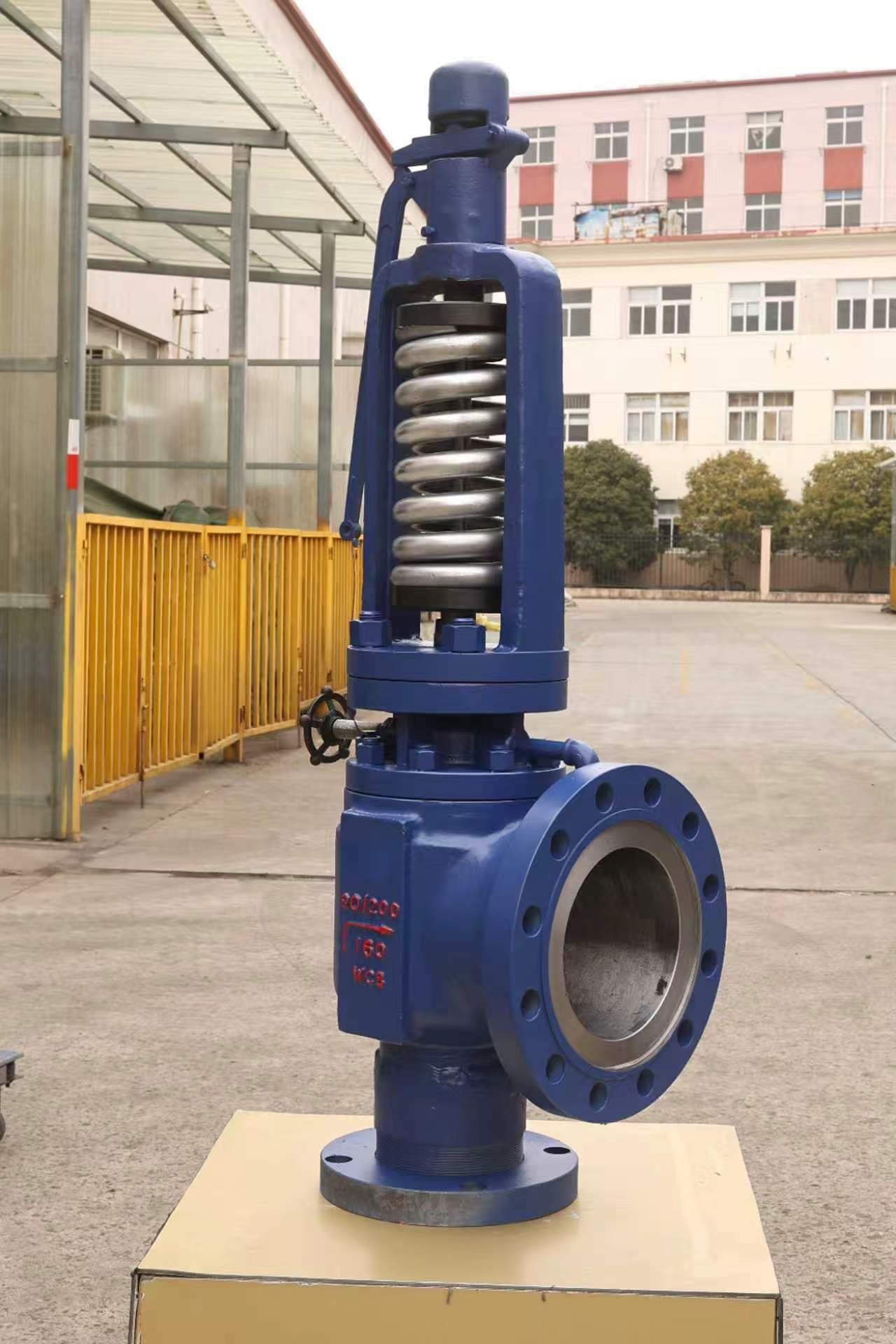
A flanged-end spring-loaded safety valve (Class 150, WCB body). The inlet flange is where wet steam enters and entrained water droplets first impinge on the seat and disc surfaces at high velocity.
Major valve manufacturers now acknowledge this. IMI Critical Engineering issued a technical bulletin in 2024 stating that wet steam causes erosion of critical valve internals (disc, seat), creating safety risks and potentially leading to unplanned outages. The company developed a dedicated product line, EroSolve Wet Steam, and reports over 200 installations — indicating that wet steam erosion is a recurring operational problem.
For operators: a valve that passes dry steam acceptance tests may erode more quickly in wet steam service.
4. Stuck-Open After Water Contact
While erosion is a chronic concern, stuck-open after water contact is an acute one.
The U.S. Nuclear Regulatory Commission (NRC) documented a finding that spring-loadedsafety valves designed for steam service, after being challenged with liquid discharge, exhibit a probability of sticking open or leaking severely that is higher than the previously estimated 3×10⁻².
The NRC's assessment states this probability is "much higher" than the 3×10⁻² figure. Its technical review of EPRI test data notes that of approximately 26 safety valve water tests, about one-third resulted in disc-to-seat chatter — either causing internal damage or requiring manual termination within seconds to prevent it.
The mechanism: safety valves rely on fluid expansion under the disc to generate lifting force. Dry steam expands readily, producing stable lift. With liquid or high-moisture two-phase flow, flashing behavior changes. The disc may chatter, fail to reach full lift, or — in the worst case — stick open after reseating should occur.
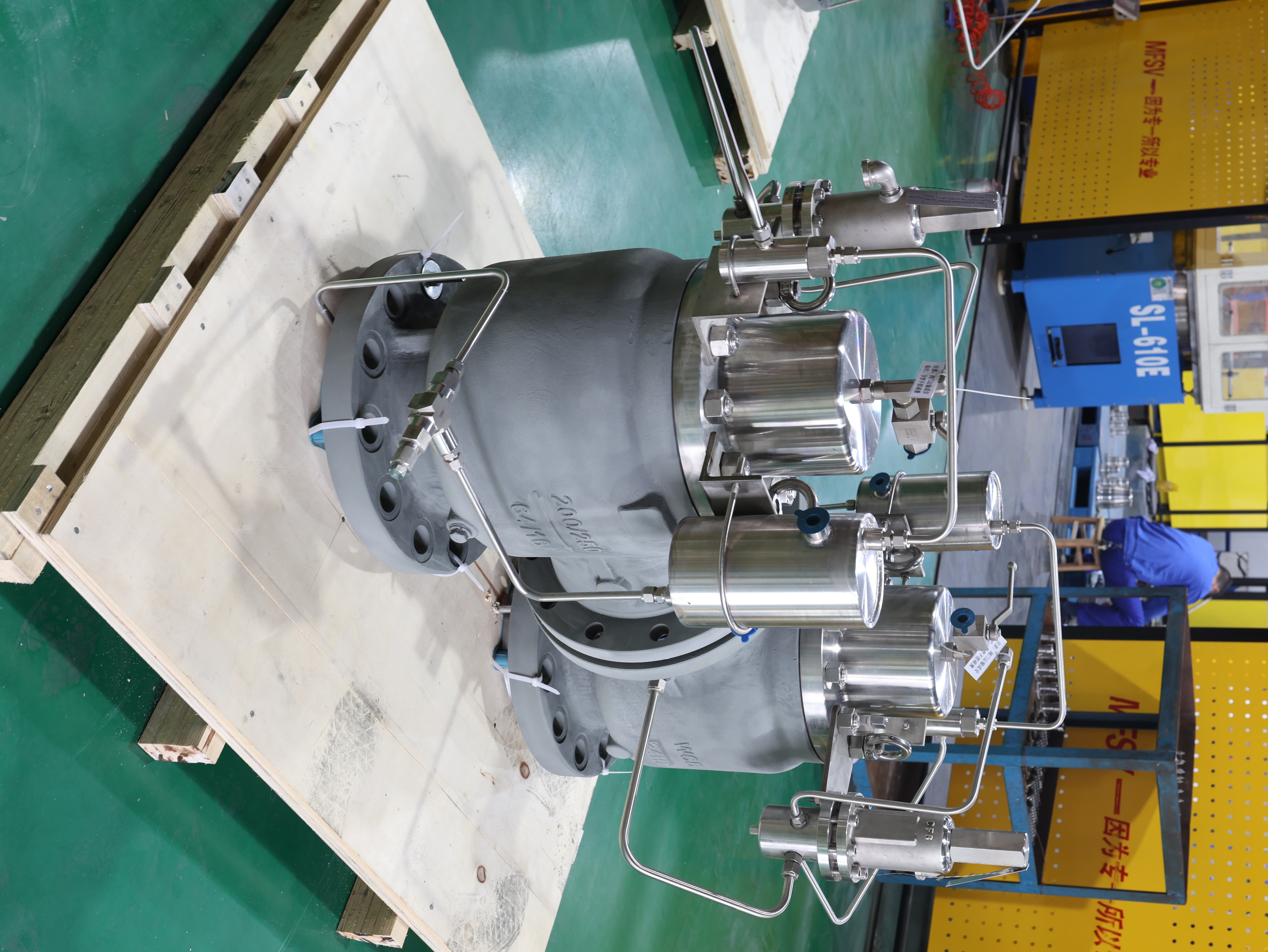
A pilot-operated safety valve assembly (gray cast body, stainless steel pilot tubing). The pilot and sensing lines make reliable reseating particularly important — water-induced chatter or sticking in the pilot circuit can have cascading effects.
Historical incidents are relevant here. The Three Mile Island Unit 2 accident (1979) involved a stuck-open power-operated relief valve (PORV) that relieved water and failed to reseat. While PORVs differ from spring-loaded safety valves, the underlying physics — water discharge leading to unreliable reseating — remains relevant.
5. The Standards Gap
ASME Section I and Section VIII certify safety valve capacity based on dry saturated steam. National Board capacity data follows the same basis.
The result is a systematic mismatch: valves are selected for dry steam, but they operate on wet steam.
One exception exists. The Russian standard GOST 24570-81 permits — but does not require — consideration of the steam-water mixture ratio when sizing safety valves for hot water boilers and economizers. Most jurisdictions and projects still default to dry steam sizing.
6. Practical Recommendations for Boiler Operators
1. Ask the dryness question. When specifying a safety valve, do not assume a dryness fraction of 1.0. If boiler outlet steam dryness routinely falls below 0.95, the valve's capacity should be re-evaluated based on actual conditions.
2. Control the water before it reaches the valve. Safety valve inlet piping with accumulated condensate will discharge water on lift. Steam traps must function correctly, and drain lines must remain clear.
3. Select materials with erosion in mind. Standard seat materials degrade faster under wet steam impingement. Consider harder sealing surface materials for wet steam service.
4. Tighten inspection intervals. Even without lifting, a safety valve in wet steam service can suffer seat damage from continuous droplet impingement. NBIC recommended test intervals should be treated as maximums rather than targets under wet steam conditions.
Summary
Every metric ton of steam carries 20 to 50 kg of water at typical dryness fractions. Neither pressure nor temperature instruments reveal it.
That water reduces heat exchanger output. At the safety valve, it affects capacity accuracy, seat life, and — in the worst case — the valve's ability to reseat after lifting.
Does your plant measure steam dryness at the boiler outlet? What is your steam pressure and temperature, and does your supply contract specify a dryness fraction?
References
• Capacity certification basis: ASME Section I/VIII and National Board standards for saturated steam relief valve capacity.
• Two-phase sizing limitations: API RP 520, Appendix D — Sizing of Safety Relief Valves for Two-Phase Flow.
• HEM under-prediction: published experimental studies on two-phase relief valve flow testing.
• Stuck-open probability: U.S. NRC technical assessment of safety valve performance under liquid discharge (EPRI test data review).
• Erosion mechanism: valve manufacturer technical literature, including IMI Critical Engineering's EroSolve Wet Steam product bulletin (2024).
• TMI-2 incident context: U.S. NRC historical documentation on the Three Mile Island Unit 2 accident.