EN
Pressure Reducing Valve vs Safety Relief Valve vs Overflow Valve: What’s the Difference?
Pressure reducing valves, safety relief valves, and overflow valves all belong to the pressure control valve family, but they are not interchangeable. Each one controls a different side of the system, operates under different conditions, and is installed in a different location.
If you mix them up during selection, you may face unstable downstream pressure, continuous pump overload, or frequent valve cycling. This guide compares the three types in plain language, with working principles, installation positions, and practical selection tips for real operating conditions.
Quick Comparison Table
Valve Type |
Controlled Pressure |
Normal State |
Installation |
Typical Application |
Pressure Reducing Valve |
Downstream pressure |
Normally open |
In-line / series |
Reduce and stabilize outlet pressure for gas or liquid |
Safety Relief Valve |
Upstream pressure |
Normally closed; opens only on abnormal overpressure |
Parallel / branch |
Overpressure protection for equipment and piping |
Overflow Valve |
Upstream pressure |
Opens occasionally, frequently, or continuously |
Parallel, usually at pump outlet |
Limit system pressure and bypass excess flow |
How to Choose Quickly
If you need to lower and stabilize pressure after the valve, choose a pressure reducing valve.
If you need to limit pressure on the inlet side, first ask whether the valve opens only during abnormal overpressure or needs frequent/continuous discharge.
For abnormal overpressure only, a safety relief valve is usually the right choice.
For frequent or continuous liquid discharge, an overflow valve is usually more suitable.
1. Pressure Reducing Valve: Lower and Stabilize Downstream Pressure
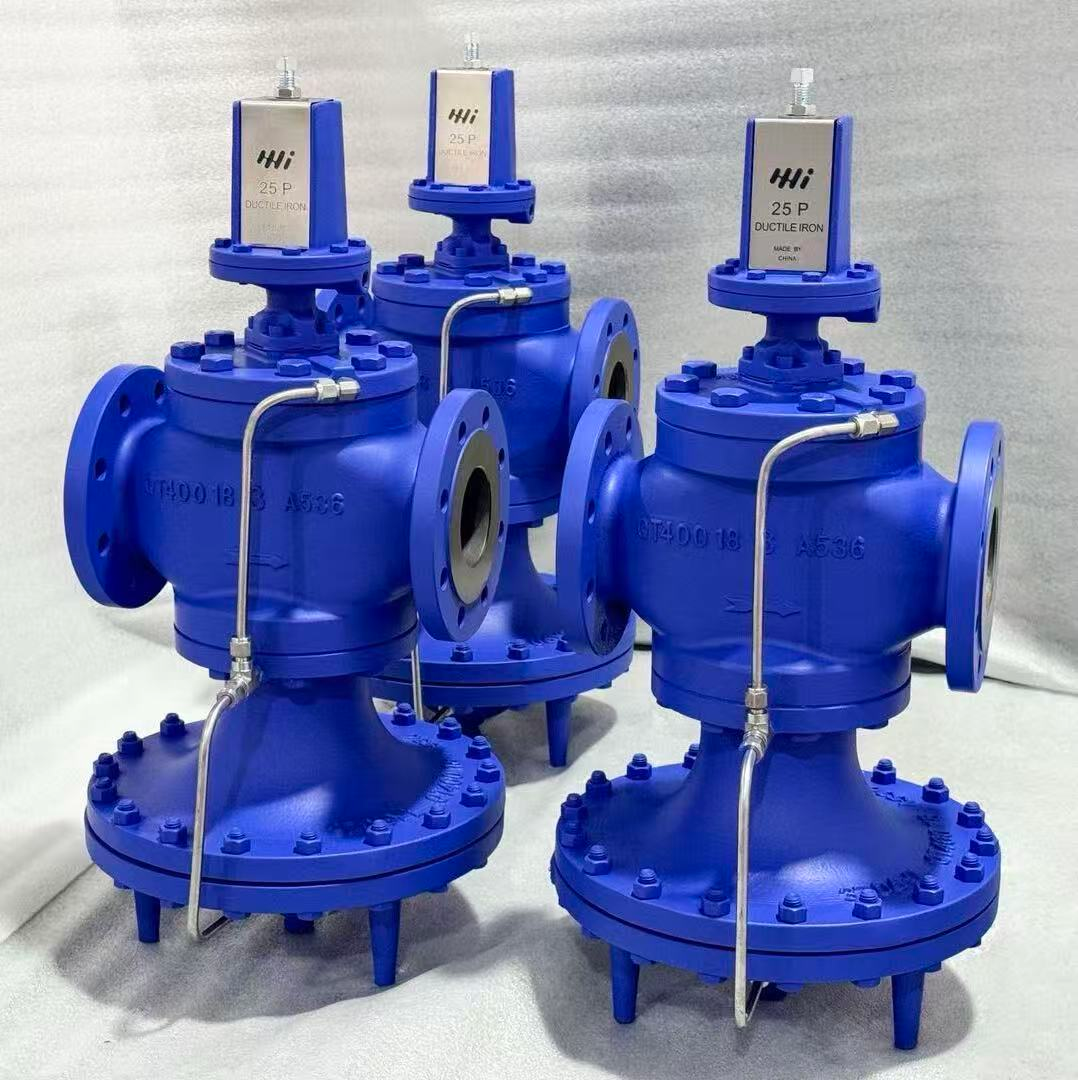
Pilot operated pressure reducing valve (ductile iron, flanged, 25 P), installed in series to lower and stabilize downstream pressure.
Working Principle
A pressure reducing valve is installed in series in the pipeline. The medium passes through a throttling port inside the valve, creating a pressure drop. Downstream pressure is fed back through a diaphragm or piston and balanced against a spring setting. When inlet pressure or downstream flow changes, the valve plug automatically adjusts its opening to keep outlet pressure within the set range.
Types
Diaphragm type: lower friction, better for applications requiring high regulation sensitivity and fast response. Regulation accuracy can reach 2%–3% based on precision reducing valve test data.
Piston type: suitable for higher inlet pressures. High-pressure reducing valves can withstand inlet pressures up to 350 bar.
Selection Tips
Flow: Do not choose the size only by connection size. If actual flow exceeds the valve’s regulating capacity, downstream pressure may drop noticeably. In that case, choose a larger size or a valve with better flow characteristics. If the valve is too large, it may operate at a very small opening for long periods, reducing regulation stability.
Filtration: For media containing particles, install a filter before the pressure reducing valve. Prefer valves with an integrated inlet strainer. Many precision and high-pressure reducing valves are equipped with a 25 μm filter.
2. Safety Relief Valve: Overpressure Protection for Abnormal Conditions
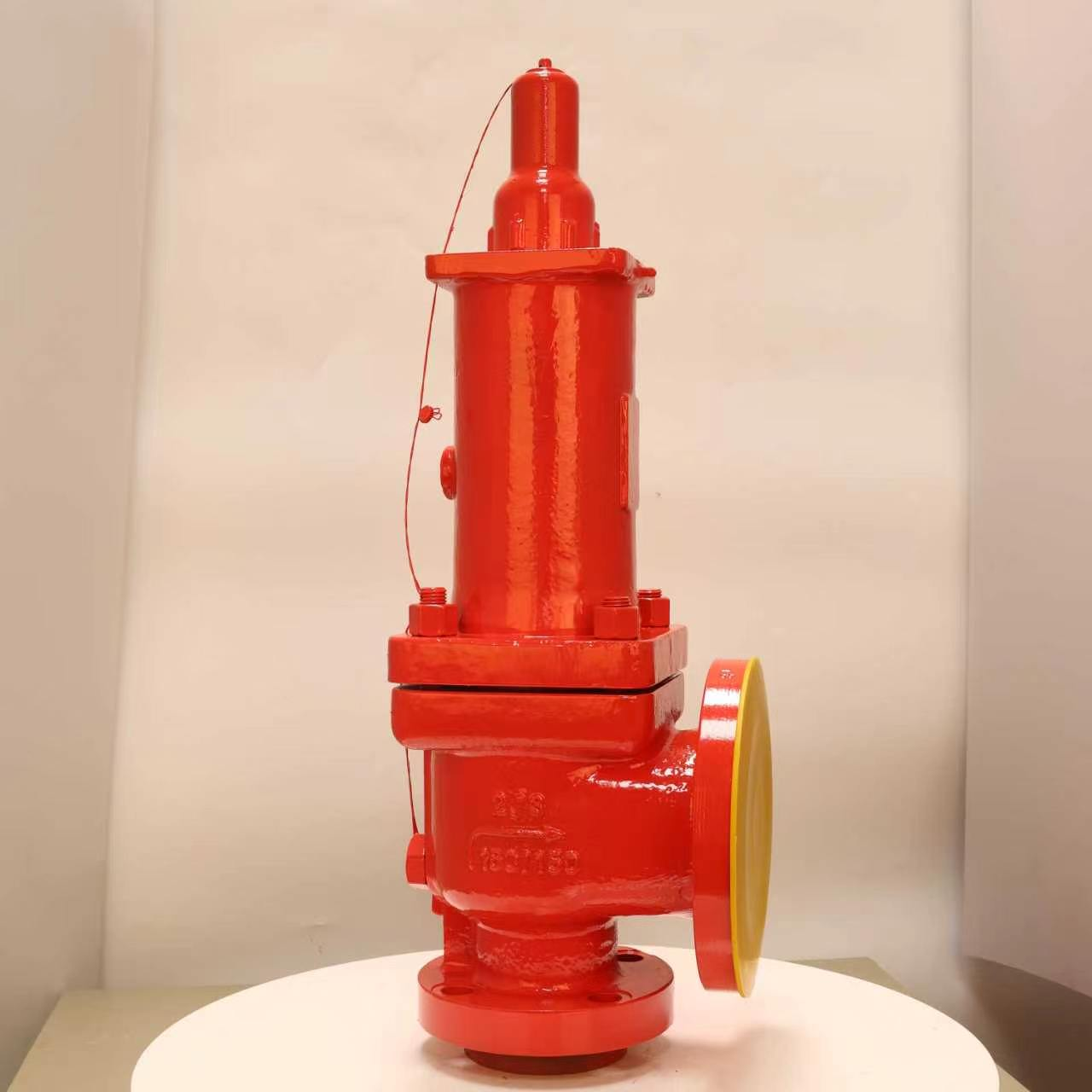
Spring loaded safety relief valve (red, flanged) installed in parallel for abnormal overpressure protection.
Working Principle
A safety relief valve is installed in parallel on the protected equipment or pipeline. When pressure is below the set value, the spring holds the valve plug against the seat, so the valve remains closed. When inlet pressure reaches the opening range, the valve opens and discharges medium. After pressure drops, it closes again.
Application
Safety relief valves often use rubber soft seals, which provide good sealing when normally closed. They are suitable for overpressure protection caused by abnormal conditions such as accidental valve closure, thermal expansion of medium, or failure of pressure regulating components. Because soft seals are not ideal for long-term frequent opening, a safety relief valve should not be used as a normal process pressure regulator or continuous bypass discharge element.
Selection Tips
Set pressure: Do not set it too close to normal working pressure, otherwise the valve may open and close frequently.
Discharge capacity: Determine the size based on the maximum possible overpressure flow in the system. Make sure the valve can discharge enough medium in time. If relief flow is less than the flow entering the system, pressure may continue to rise.
3. Overflow Valve: Overpressure Protection and Pump Outlet Pressure Control
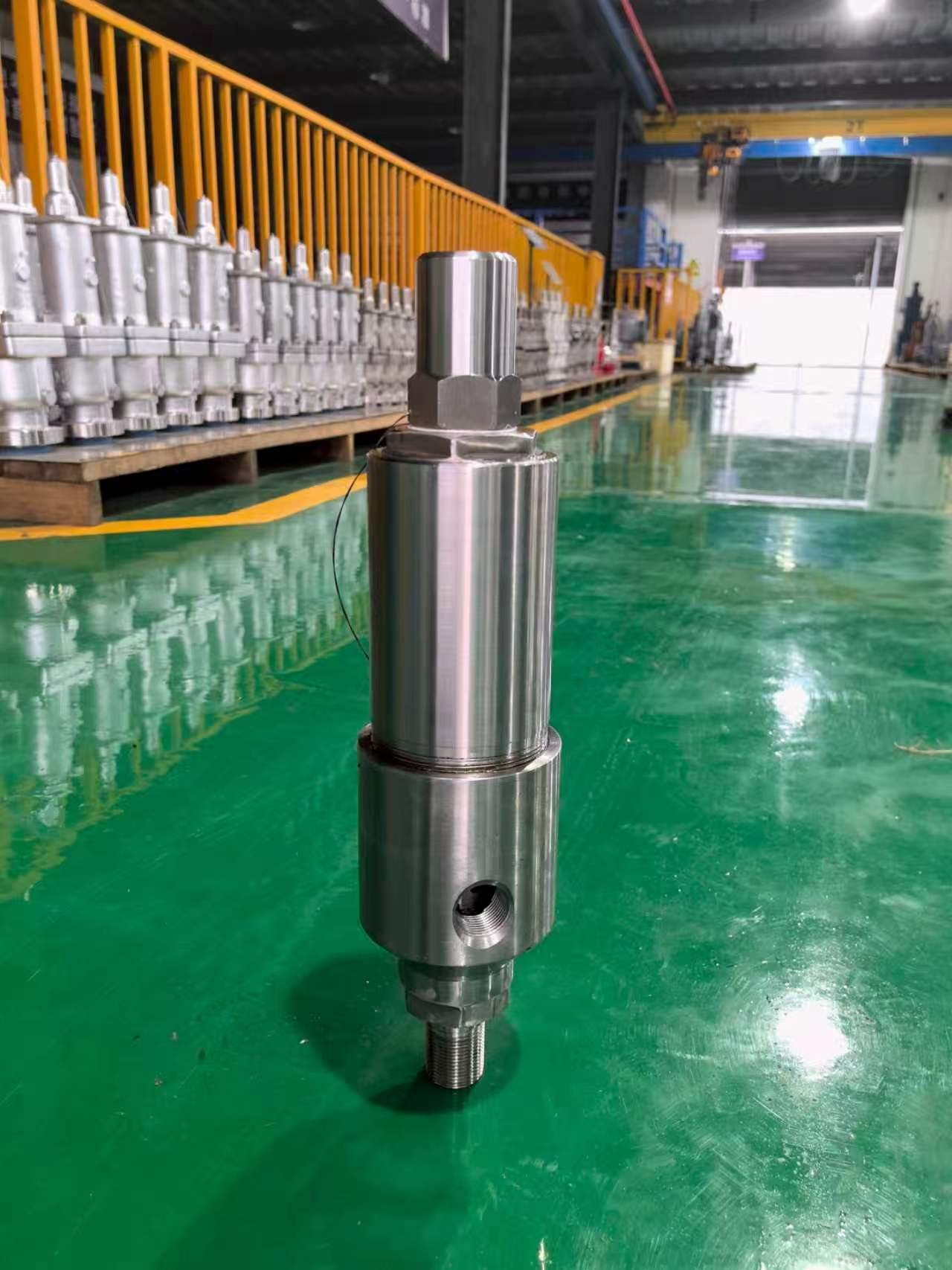
Stainless steel threaded overflow valve for liquid pump outlet bypass and pressure control.
Working Principle
Overflow valves (also known as pressure bypass valves) are mainly used in liquid systems, commonly at the outlet of fixed-displacement pumps. When actuator demand decreases, a control valve closes, or system resistance increases, pump outlet pressure rises. The overflow valve opens and returns part of the liquid to the tank, pump inlet, or another low-pressure side, thereby limiting pump outlet pressure.
Compared with a safety relief valve, which focuses on abnormal overpressure relief, an overflow valve is better suited for pump outlet pressure control where frequent or continuous liquid discharge is required. The two cannot be replaced simply based on set pressure.
Two Main Applications
1. When system pressure rises abnormally, the overflow valve opens and discharges liquid to limit maximum pressure.
2. When a fixed-displacement pump supplies continuous flow, the overflow valve discharges excess flow according to system demand and participates in pump outlet pressure regulation.
Selection Tips
Pressure and flow: Confirm set pressure, maximum pump output flow, normal system demand, maximum surplus flow, and pressure difference across the valve.
Structure and operating frequency: Based on occasional opening, frequent action, or continuous overflow, check seat structure, seal material, vibration resistance, flow capacity, and service life.
Return line and heat: Check return pipe diameter and outlet back pressure. During continuous overflow, liquid throttling generates heat. Evaluate medium temperature rise, tank volume, and system cooling capacity.
Selection by Application
To make the choice faster, match the valve type to the actual service:
Steam or compressed gas pressure stabilization → Pilot operated pressure reducing valve (normally open, installed in series)
Piping and vessel overpressure protection with rare discharge → Spring loaded safety relief valve (normally closed, installed in parallel)
Positive displacement pump outlet with frequent or continuous liquid bypass → Stainless steel overflow valve (parallel, at pump outlet)
4. FAQ
Can a safety relief valve replace an overflow valve for pump outlet pressure control?
A safety relief valve can handle abnormal overpressure in suitable applications, but it is not necessarily suitable for frequent opening or continuous discharge. When a fixed-displacement pump needs long-term bypass pressure regulation, an overflow valve is usually the correct choice.
Can an overflow valve be used for overpressure protection?
An overflow valve can limit the maximum pressure in suitable liquid systems. However, if applicable codes or design standards explicitly require a safety valve, a general overflow valve cannot be used as a substitute.
Does a pressure reducing valve need downstream relief protection?
It depends on the allowable pressure of downstream equipment and system failure risk. If failure of the pressure reducing valve could cause downstream pressure to exceed equipment limits, an independent pressure relief device should be installed.
5. Information Needed for Valve Selection
To help engineers or suppliers judge the right valve type and product suitability, prepare the following information:
Medium, corrosiveness, viscosity, and cleanliness
Inlet pressure and target outlet pressure
Normal flow, maximum flow, or required relief flow under abnormal conditions
Working temperature, connection type, operating frequency, and outlet back pressure
Conclusion
Pressure reducing valves, safety relief valves, and overflow valves all control pressure, but they solve different problems. The key is to identify which side of the system needs pressure control, whether the valve works normally open or normally closed, and whether discharge is occasional or continuous.
For overseas buyers and engineers, the safest approach is to select by working condition, not by name alone. Provide medium, pressure, flow, temperature, and operating frequency, and the right valve type becomes much easier to confirm.
Table of Contents
- Pressure Reducing Valve vs Safety Relief Valve vs Overflow Valve: What’s the Difference?
- Quick Comparison Table
- How to Choose Quickly
- 1. Pressure Reducing Valve: Lower and Stabilize Downstream Pressure
- 2. Safety Relief Valve: Overpressure Protection for Abnormal Conditions
- 3. Overflow Valve: Overpressure Protection and Pump Outlet Pressure Control
- Selection by Application
- 4. FAQ
- 5. Information Needed for Valve Selection
- Conclusion