EN

Spring Loaded vs Pilot Operated Safety Valve: What’s the Difference?
Safety valves protect pressurized systems by opening automatically when pressure exceeds the set point. The two most common designs are the spring loaded (direct acting) valve and the pilot operated valve. Both do the same job, but they sense pressure differently, respond differently, and suit different working conditions. This guide compares the two types in plain language — working principle, set pressure accuracy, blowdown, back pressure, maintenance, and cost — to help you choose for real operating conditions.
Quick Comparison Table
Aspect |
Spring Loaded |
Pilot Operated |
Actuation |
Direct spring force on the disc |
Pilot senses pressure and controls the main valve |
Set pressure accuracy |
Good (within tolerance) |
Excellent (can be very tight) |
Blowdown |
Fixed by design, typically wider |
Adjustable, can be smaller |
Back pressure effect |
Sensitive to back pressure |
Much less sensitive |
Sealing |
Soft seat can be tight; metal seat may leak slightly |
Generally tighter sealing |
Response |
Fast, direct opening |
Slightly slower due to pilot line |
Maintenance |
Simpler, fewer parts |
More parts; pilot needs care |
Cost |
Lower |
Higher |
How to Choose Quickly
For most steam and compressed gas systems, a spring loaded safety valve is the standard, reliable, economical choice.
For very high set pressure accuracy, tight sealing, or systems where built-up back pressure must not affect opening, consider a pilot operated valve.
For liquid service with low opening pressures, verify pilot suitability and response with your supplier.
1. Spring Loaded Safety Valve: Direct and Reliable
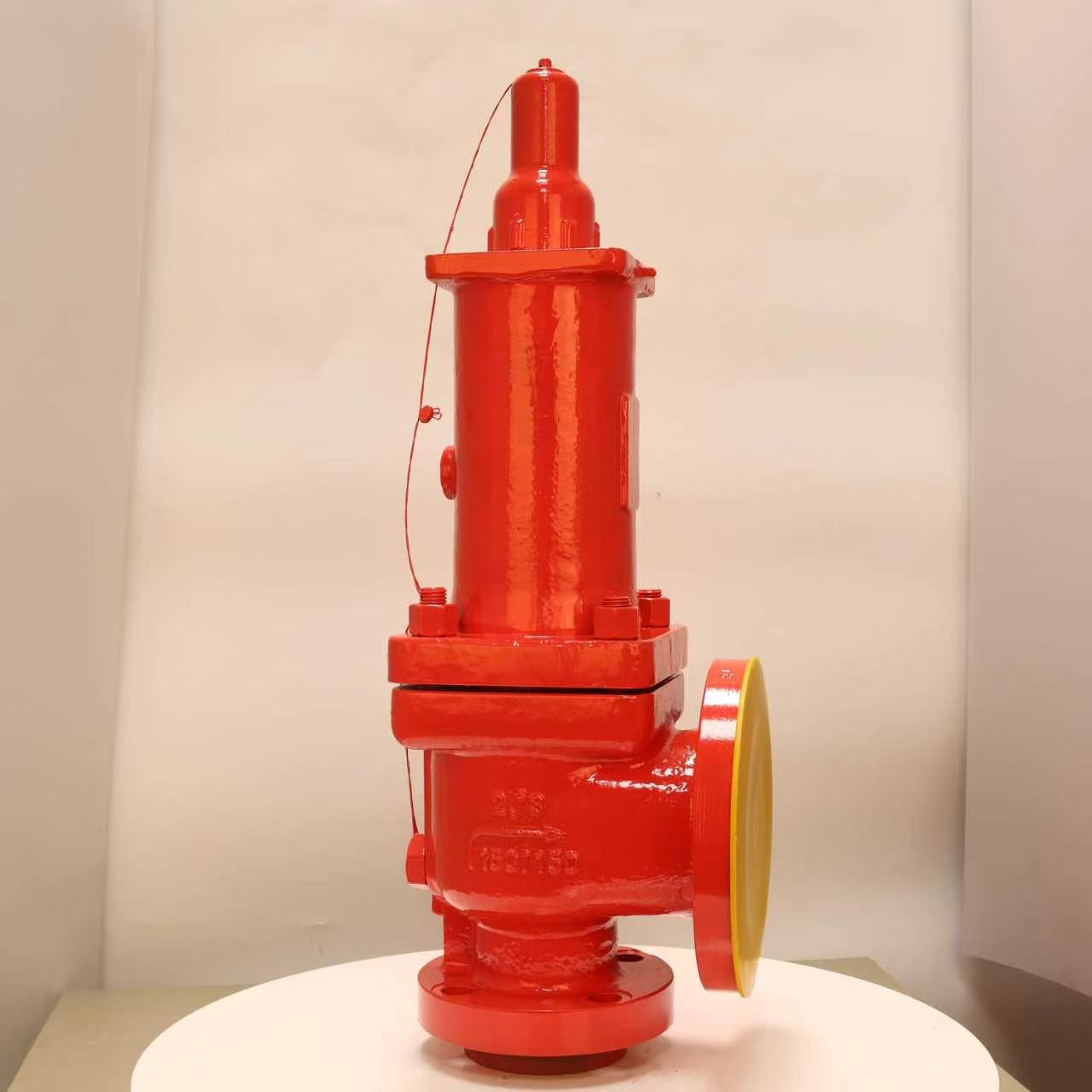
Spring loaded safety valve (red, flanged), the standard direct acting choice for steam and gas overpressure protection.
Working Principle
A spring loaded (direct acting) safety valve holds the disc against the seat with spring force. Inlet pressure acts against the disc. When the pressure rises enough to overcome the spring force, the disc lifts and discharges the medium. After the pressure drops below the reseating point, the spring closes the valve again. The valve senses the process pressure directly at its inlet, with no external power required.
Features
Simple, self-contained, and works without external power.
Set pressure is adjustable via the spring and adjusting ring.
Blowdown (the pressure drop between opening and reseating) is fixed by the internal design.
Widely used for steam, compressed air, gases, and many liquid overpressure applications.
Limitations
Opening characteristics are less adjustable than a pilot valve.
Sensitive to back pressure in the discharge line; back pressure changes can shift the set pressure or reduce lift.
Metal-seated versions may allow a small leakage until the set point is reached.
2. Pilot Operated Safety Valve: Accurate and Back Pressure Insensitive
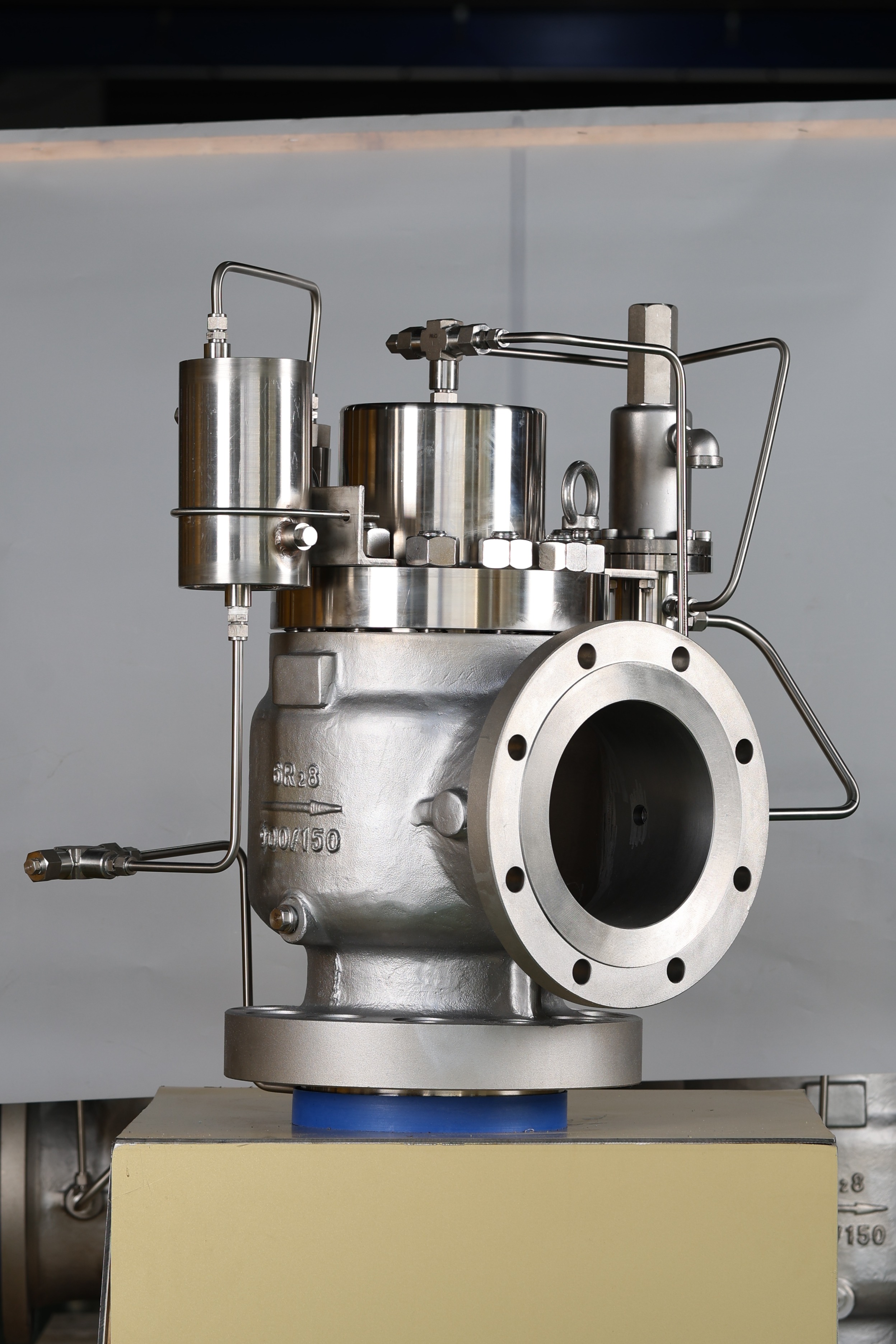
Pilot operated safety valve with pilot and sensing line, for accurate set pressure and tight sealing.
Working Principle
A pilot operated safety valve uses a small pilot valve that senses the inlet pressure and controls the larger main valve. Under normal pressure, the pilot holds the main valve tightly closed. When the pressure reaches the set point, the pilot opens and vents, unloading the main valve so it opens fully. This gives very accurate set pressure and tight sealing.
Features
Very accurate set pressure, small blowdown, and stable reseating.
Largely insensitive to back pressure, suitable for high built-up back pressure systems.
Good for large orifice sizes and high flow where a direct spring valve would need a very large spring.
Often provides bubble-tight closing with soft seals.
Limitations
More components (pilot and sensing lines) — more to maintain and inspect.
Response can be slightly slower than a direct spring valve.
Slightly higher cost; sensing lines need care on dirty or condensate-forming media.
3. Selection Tips
Media and cleanliness: for dirty, wet, or condensate-prone gas, protect the pilot sensing line or choose a spring loaded valve.
Back pressure: if the discharge line has variable or high back pressure, a pilot operated valve is usually better.
Set pressure margin: keep the set pressure above normal working pressure by a safe margin per the applicable code, to avoid frequent opening.
Sizing: confirm the required relief flow, orifice area, and inlet/outlet sizes with the sizing method required by your design standard.
4. FAQ
Is a pilot operated safety valve always better than a spring loaded one?
No. Spring loaded valves are simpler, cheaper, and more robust for most steam and gas systems. Choose a pilot valve mainly when you need very tight set pressure accuracy, tight sealing, or when back pressure would affect a spring valve.
Can a spring loaded safety valve handle liquid service?
Yes, with a suitable design. Liquid relief valves often open more gradually than gas valves, so verify the valve is rated for liquid and sized for the required liquid relief flow.
What causes a safety valve to chatter?
Chatter usually happens when the valve is oversized or when the system pressure cycles around the set point. Correct sizing and a proper set-pressure margin usually solve it.
5. Information Needed for Valve Selection
To help engineers or suppliers judge the right valve type and product suitability, prepare the following information:
Medium (gas, steam, or liquid), corrosiveness, viscosity, and cleanliness
Normal working pressure and required set pressure
Required relief flow under abnormal conditions
Working temperature, connection type (threaded or flanged), back pressure, and any code or certification requirement
Conclusion
Spring loaded and pilot operated safety valves both protect systems, but they trade simplicity against accuracy and back pressure performance. For most steam and gas systems a spring loaded valve is the dependable, economical standard. Choose a pilot operated valve when you need very tight set pressure, tight sealing, or when back pressure is a real factor.
For overseas buyers and engineers, the safest approach is to select by working condition, not by name alone. Provide medium, pressure, flow, temperature, and back pressure, and the right valve type becomes much easier to confirm.
Table of Contents
- Spring Loaded vs Pilot Operated Safety Valve: What’s the Difference?
- Quick Comparison Table
- How to Choose Quickly
- 1. Spring Loaded Safety Valve: Direct and Reliable
- 2. Pilot Operated Safety Valve: Accurate and Back Pressure Insensitive
- 3. Selection Tips
- 4. FAQ
- 5. Information Needed for Valve Selection
- Conclusion